Mystery is the best marketing

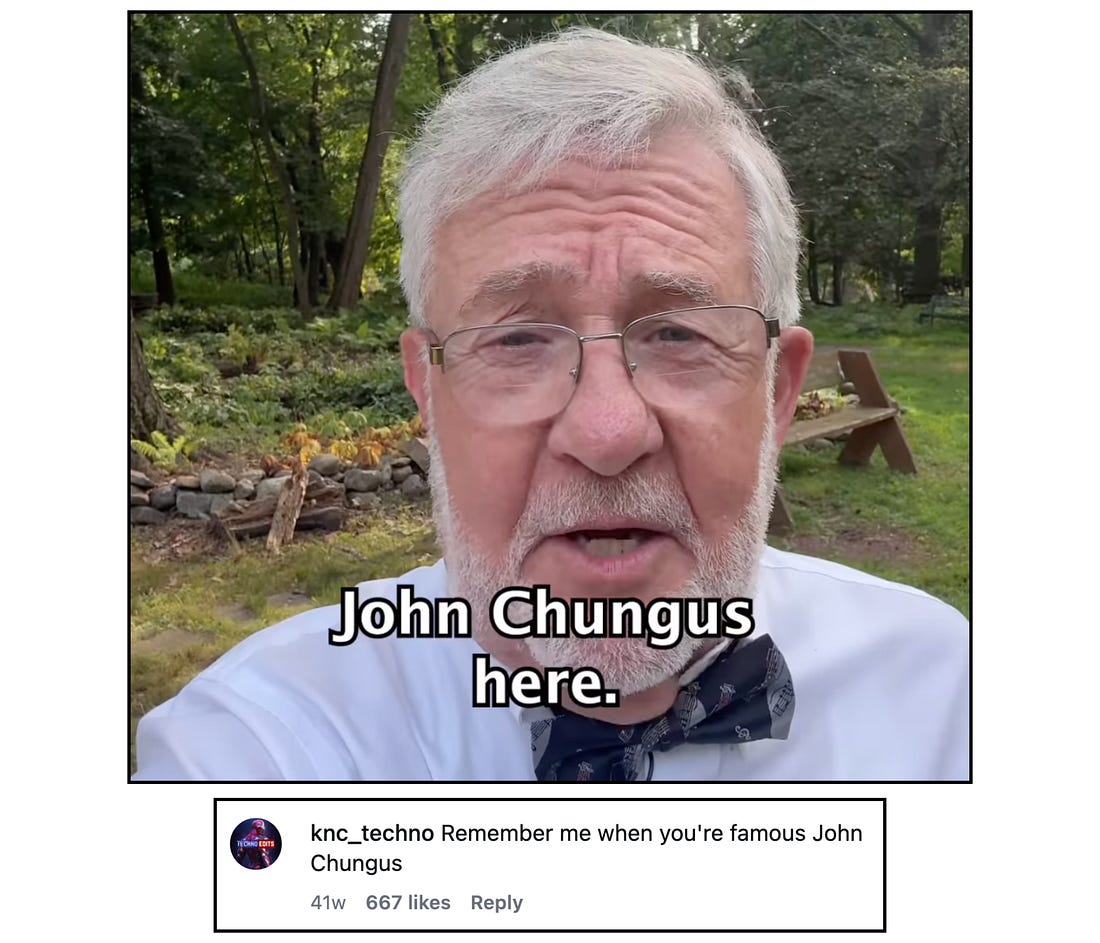
Tomorrow the movie Backrooms will play in theaters across the country. It’s directed by 20-year-old Kane Parsons and is aiming for a $45M opening weekend. If I was being reductive, I would say that it’s a movie about a photo that was shared on 4chan. But really it’s a movie about everything around that photo. The myths, the questions, the short films, the Reddit threads. What’s left unsaid leaves room for people to imagine. To superimpose themselves into the story. To build layers of lore. That way, by the time Backrooms reaches me—which it only did a few months ago—I have textbooks worth of knowledge to catch up on. Now I’m in their world too. Mystery is the best marketing. “People want to be at the start of something. That’s our urge to be a part of the meta-narrative.”I often get asked what it means to break through in culture. We used to look to views. Now, I’d argue its participation. When I study the most-watched videos on TikTok every month, I’m always surprised at how few actually broke through culturally. I know something is resonating today when the more interesting content is being made in comments sections and on personal accounts. Content about the content. The “red flats queen” video from the Met Gala isn’t what made the moment break through. It was the speculation. Who is she? Where does she work? What’s going on? In a conversation with Colin and Samir, creator Anthony Po talked about how the most crucial piece of his stunt accounts like Cheeseball Man and John Chungus is to start it from scratch on a new page. He says, “People want to be at the start of something. That’s our urge to be a part of the meta-narrative.” That urge fuels participation. Anthony knew John Chungus had momentum not when the views went up, but when fan edits rolled in.
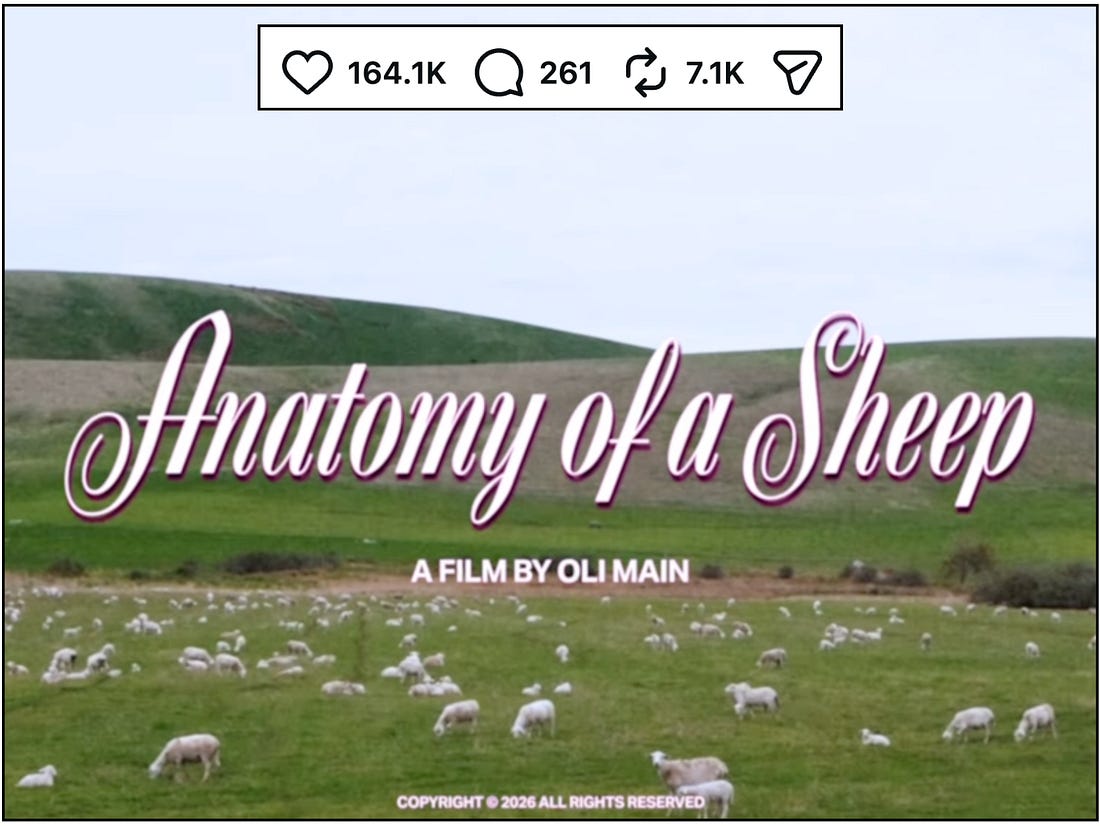
That part about being “at the start of something” is important. There’s social currency to telling your friend about a funny video before their own algorithm does. It’s getting harder and harder to do. A few days ago I came across a brilliant Reel titled Anatomy of a Sheep. It had only 1,000 likes and the creator had less than 2,000 followers. I got the same feeling as when I was a teen and first heard a Coconut Records song or watched Blue Velvet. That euphoria of personal discovery that makes you want to fall down a wormhole into fandom. I thought I was at the start of it. The next day the video had 100K likes.
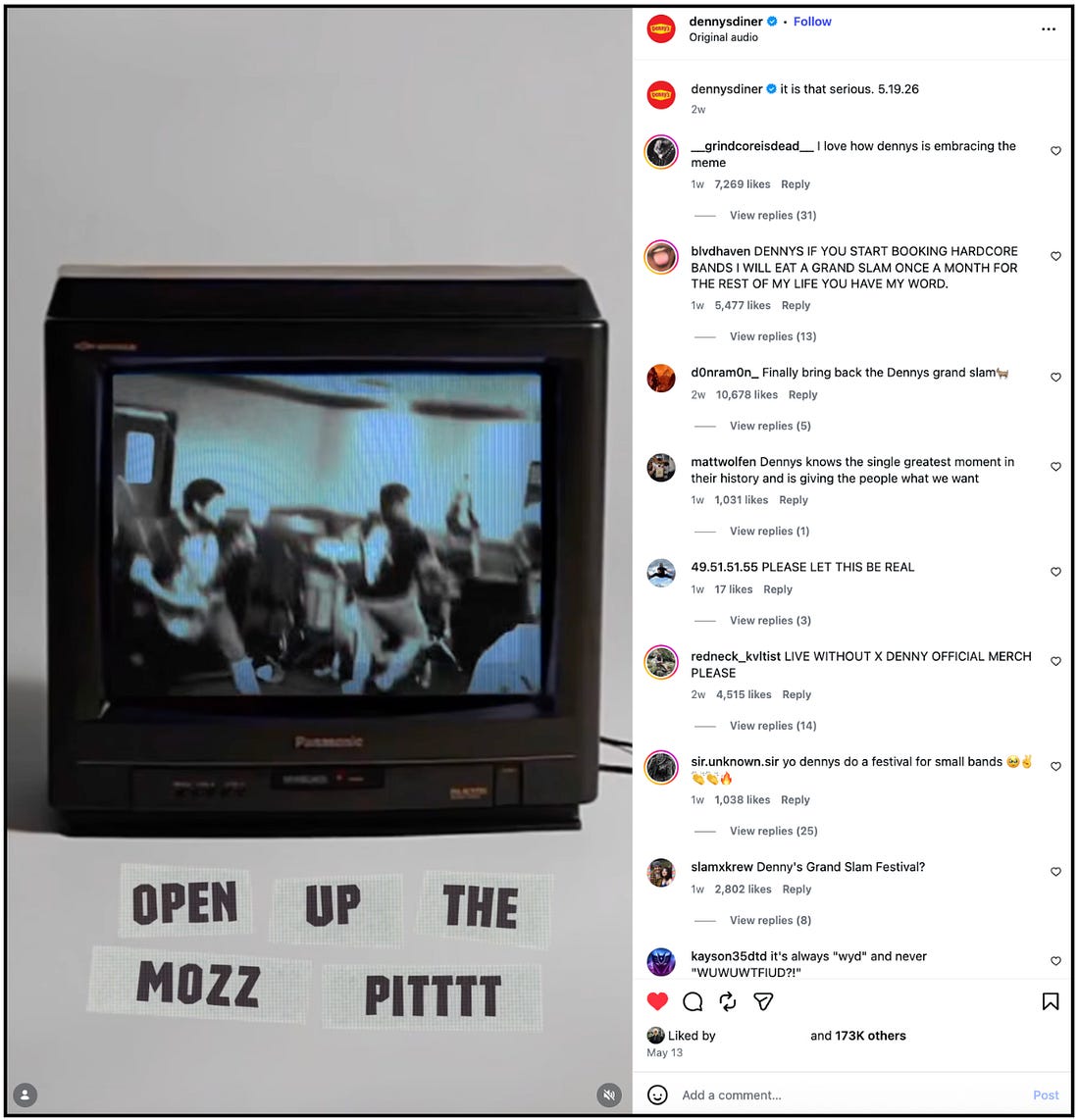
In a recent article by Amy Francombe in Vogue Business, she writes, “As artificial intelligence accelerates replication, influencer culture reaches saturation, and global crisis seeps into the consumer consciousness, the industry’s reliance on scale as a proxy for value is losing traction.” She goes on to say, “This increasingly means brands trading spectacle for something harder to manufacture: meaning and connection, built through human relationships and stories that feel grounded in lived experience rather than engineered for scale.” Amy talks about how luxury fashion brands are tapping into their own history as meta-narratives. Simon Porte Jacquemus naming his grandmother as the brand’s first ambassador and Jonathan Anderson inviting Paulette Boncoure, an atelier artisan who started working at Dior in 1947, to the show. The post sharing the video of Paulette arriving has over 50K likes. Denny’s case study13 years ago, a video of the band Live Without performing inside a Denny’s got 5.3M views on YouTube. A phrase from it—“What the fuck is up, Denny’s?!”—stuck. The conversation around it stayed active in the years since, with accounts celebrating its anniversary and multiple Reddit threads. Last week, Denny’s finally collaborated with the the band. The video has 3M views across platforms. A wink at the existing fandom, an invitation for a new one. I had never seen the original video. But the web of super fans who were excited about the collab reverberated across the internet and right into my feed. I went down that same deep dive I did for Backrooms. Now I’m in their world too. 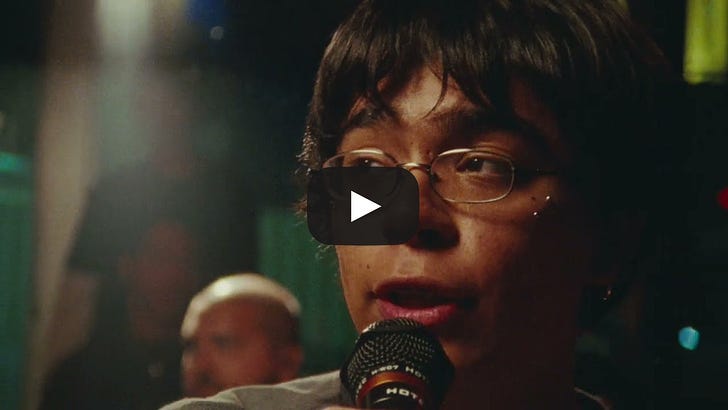
Below I spoke to the Sam Ellis, Head of Social at Denny’s, about the decision to finally lean in and why he trusted the audience would get it. Rachel Karten: Can you take me into the early stages of the idea? Why was now the right time for Denny’s to reference this viral video? Sam Ellis: I joined Denny’s just over a year ago and my first question was: “Why haven’t we reengaged the WTF moment?” Doing what you do, you probably remember Denny’s was one of the first brands to really embrace social media in a distinctive way (our Tumblr era, as it were) and, over the past year or so, we’ve been intentionally reconnecting with that DNA and leaning back into a more social-first approach to marketing. That approach is spearheaded by one simple idea: people want entertainment, not ads. And what’s more entertaining than “What the F#$@ is up, Denny’s?” So, once we solidified that strategy, we picked up the phone, called the band, and the rest is history. Rachel: Were you at all worried about people recognizing the reference? I like how the teaser served as a reminder. Sam: I think we trusted the nature of social media on this one. Every time we’ve even nodded to this moment it’s done big numbers on social so we felt confident if we teed this up correctly, the algorithm would do its thing and make sure it was put in front of the fans with whom it would resonate most. Still, to your point, we’re always wary of being too “inside baseball” and needed to ensure even those with a vague awareness were brought along for the ride. So the teaser, including the original clip in the first few seconds of the video, etc.—those pieces were super critical.
Rachel: I loved the announcement video. Can you share some of the creative decisions made when creating it? For example, I thought it was smart to show the original video in YouTube UI up top to really bring people in. Sam: First, I have to give credit to our director Matt Zolly because we charged him with a tough task—revive this moment in a fun interesting way while incorporating a product without over-commercializing it. Like I said, people want entertainment, not ads, but especially given this audience and the respect they deserve, we had to be mindful to not turn it into a whole corporate branded thing. Certainly, we’re always trying to sell more burgers and pancakes but that was far from our primary goal here. Matt absolutely nailed that balance and was also super collaborative and open to ideas. As for creative decisions, including the original clip in the first few seconds was a brand-side note but the food fight was all Zolly! The burger-to-the-face shot is currently my phone background. Rachel: Are you able to share any numbers that point to the success? Sam: Absolutely. Statistically, this has already been our most successful social campaign of all time, with nearly 10M social impressions, a million engagements, and an Engagement Rate of 13.16% in the first few days alone. For comparison, on Instagram the flagship video currently sits at 547K engagements, making it our most successful Instagram post of all time (paid or organic). Second place has 216K engagements. And my favorite part—this was entirely organic. Not a single dollar of media weight. Rachel: Link in Bio contributor Matthew Stasoff quote tweeted the video with “explore your lore”. Do you think more brands should explore their lore? Sam: We’re proud of this campaign. We worked hard and feel it’s a tremendous accomplishment. But at the same time, this was a gift from the zeitgeist. How many brands have a moment like this woven into their history? Something culture decided was cool and interesting about you and you didn’t even have to buy it or ask for it. When something like that gets dropped in your lap, doing something about it shouldn’t be optional. You just have to do it right. So yes, brands should absolutely explore their lore. Find what people already dig about you and find a way to amplify it in an interesting, unexpected way. Three takeaways on the Denny’s creative from Director Matt Zolly:
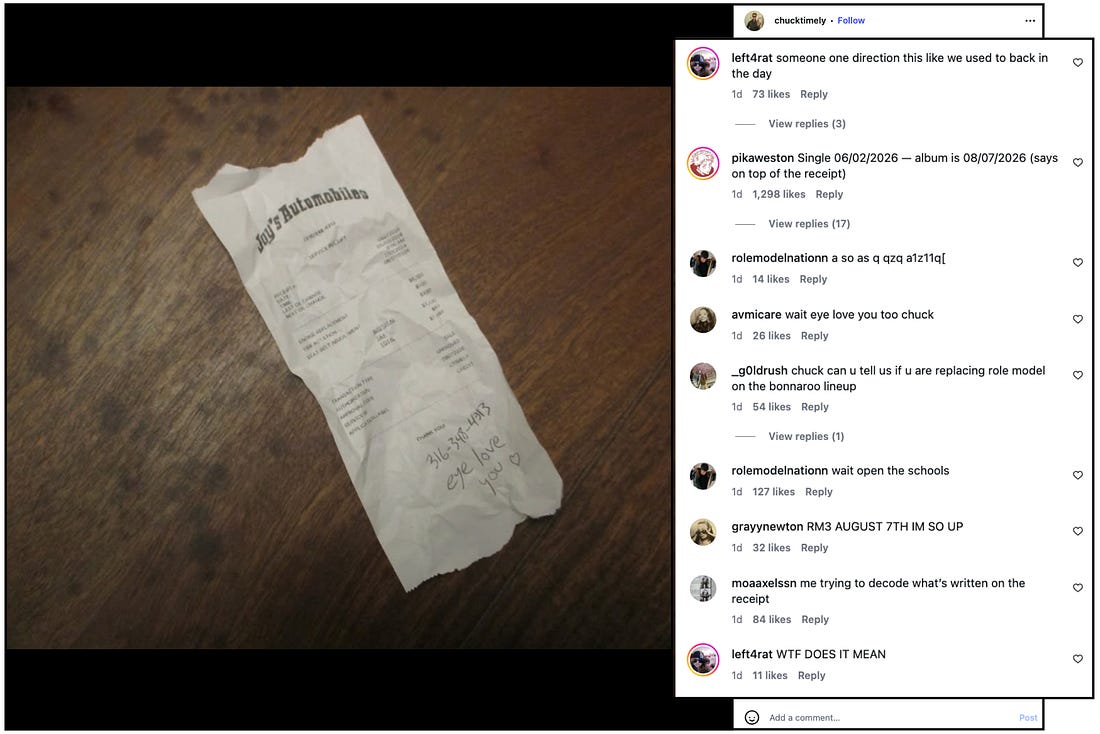
Mystery requires trustAs I was writing this, the musician Role Model created an account called Chuck Timely. A new alter ego unlocked. It is on that account, not his main one with 1.2M followers, that he teased his new single. The stunt has resulted in Reddit threads asking for “theories” on it, TikTok merch unboxings, and easter egg comment sections. What was left unsaid was immediately filled in by his audience. That’s how momentum is built on social now.
Creating mystery requires trust. Trusting that your audience will “get it”. Unfortunately, many brands optimize themselves out of that. They give away the product in the teaser. Use the ending as a hook. Over-explain the concept. It’s why we get Super Bowl commercials with press releases one month before the game. In a recent interview, Obsession director-writer Curry Baker said, “YouTube taught me that a modern horror audience is really smart. I would do [my YouTube short films] and cross my fingers and hope people pick up on these small things, and you bet they’ll pick up on things you didn’t even intend. You learn that people are actually very smart, so let’s not treat them like they’re dumb.” It’s good advice for horror directors. It’s good advice for brands. Approach your social media strategy with an assumption that your audience is intelligent. The rest will follow. Thanks so much for reading. If you enjoy free essays like this one, you can upgrade to a paid Link in Bio subscription. You’ll get weekly strategy newsletters and quarterly trend reports, along with access to the Discord community. If you’re already a paid subscriber, thank you for making this newsletter possible! Finally, there are new roles added every day to the Link in Bio Job Board. Check out the latest from Dôen, Sonos, and Raising Cane's here. Interested in partnering with Link in Bio? Email rachelkartengroup@caa.com for more details. You’re currently a free subscriber to Link in Bio. For the full experience, upgrade your subscription.
|




Comments
Post a Comment