Rekindling My Relationship With Ice Cream

Rekindling My Relationship With Ice CreamNo-churn, Philadelphia, and custard-style ice cream recipes, plus the machines worth buying
My first job was breaking down cardboard boxes in the back of my parents’ Baskin-Robbins. Not scooping or ringing people up, but getting real intimate with corrugated cardboard. I’d flatten them, stack them, then tie them into neat bundles. I was maybe seven, and I was very, very serious about it. There is an art to it. When you loop the string around the boxes just right, you can yank it while standing on the heap to tighten the stack into a dense brick. To this day, when I’m walking through the city on garbage night and see a pile of haphazardly collapsed cardboard, tied incorrectly or not at all, I feel physical discomfort. When I retire, I’m going to spend my remaining years walking the streets of New York, restacking and retying cardboard boxes. I remember the smell of that back room. The industrial sweetness of the walk-in and the sugar-heavy air that clung to everything. I loved making clown cones, a BR staple where a scoop of ice cream is flipped onto a cookie, then decorated with ruffles of sugary buttercream and candy to look like a clown. We even used to make ice cream sandwiches to order. Corporate now prefers them premade and packaged so they can upcharge the franchisees, but whenever I visit, I make myself a fresh one. I learned at a young age how food can make people happy in an uncomplicated, immediate way. A perfectly stacked scoop in a freshly baked waffle cone, and someone’s kid absolutely losing their mind over it, that was a good day. Ice cream has never really left me. When I was working as a pastry chef, I was spinning four to ten flavors a day, cooking gallons of base at a time. And that, it turns out, is exactly how to ruin your relationship with something you love. Making vast quantities of ice cream under a serious time crunch—the heat, the pressure, the sheer volume—stripped all the joy out of it. I still have visceral memories of scorching a twenty-gallon batch. The smell alone was enough to make me swear off the whole thing. I didn’t make ice cream for a long time, but Ham kept gently nudging me back toward it, the way he does, until I finally caved and made a quart or two at home. Immediately, I felt the anxiety creep in, followed almost instantly by the realization that this is actually fast and easy and fun when you’re not cooking it in quantities that could fill a bathtub. It’s been a slow exposure therapy, and I’m happy to report that I’m coming out the other side. With small batches churned in my own kitchen, and no one yelling about the schedule, I love ice cream again. Making ice cream at home is fun and easy. Here are three recipes inspired by my favorite Baskin-Robbins flavors, info on no churn, Philadelphia, and custard-style ice creams, plus my favorite tools and machines if you’re on the market. 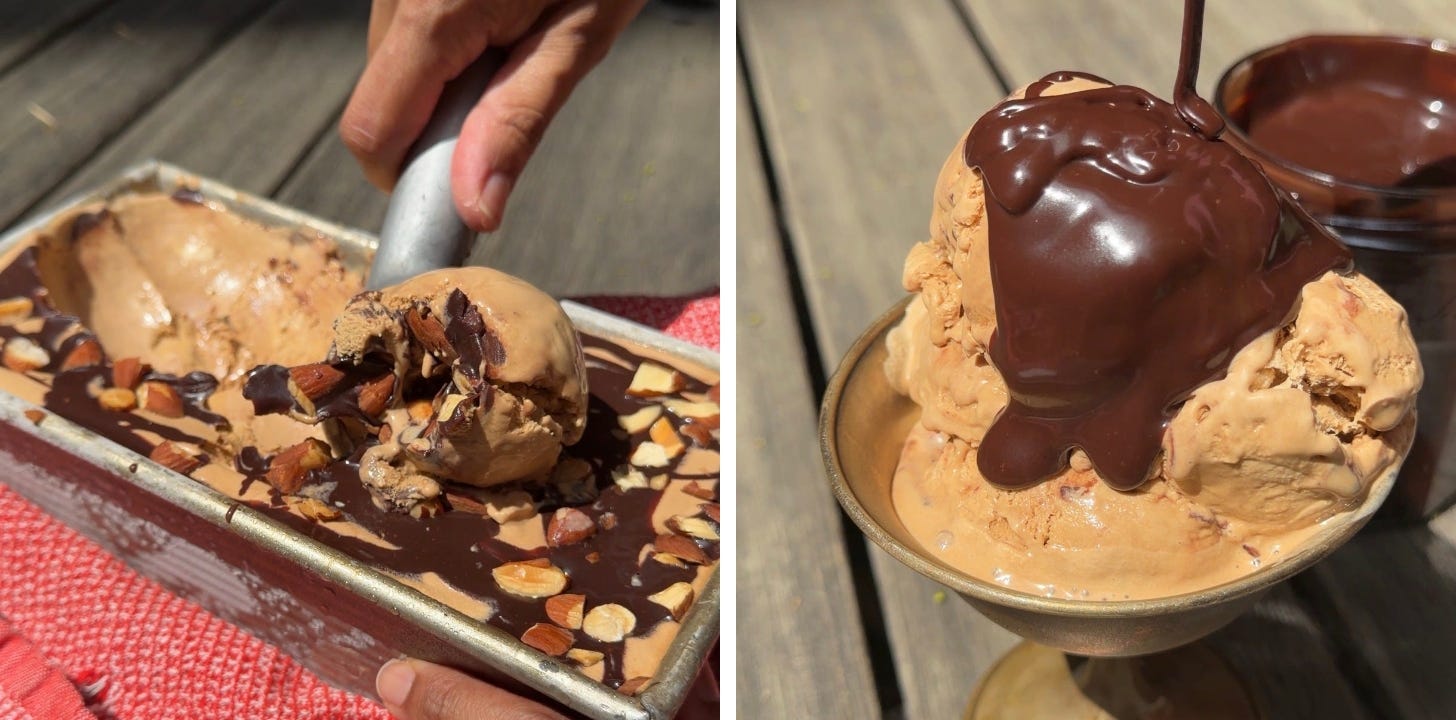
No-Churn Jamoca Almond Fudge Ice CreamWhen I was a kid, I made ice cream at home by pouring the base into the mixing bowl, resting it precariously in the freezer on bags of frozen okra, then whisking every ten minutes over the course of an entire day. Some might call that dedication, but I was probably just stubborn. If I’d known this trick, it would have changed my life. All you need is 1 pint of heavy cream, whipped until fluffy then folded into 1 can of sweetened condensed milk. It freezes up scoopable and creamy. The fat from the cream and the sugar from the condensed milk work together to keep large ice crystals from forming as it freezes, which is the main thing you’re fighting when you make ice cream without a machine. The flavor is sweeter and the texture is slightly softer than churned ice cream, but this simple base is endlessly riffable. To counter that sweetness, I add heaps of instant coffee for a no-churn Jamoca Almond Fudge recipe so we can all BR at home. ingredients
steps
Philadelphia-Style Mint Chocolate Chip Ice CreamPhiladelphia-style ice cream is churned from an eggless base and, at its simplest, is just cream, milk, and sugar. It has a clean, milky flavor that allows other flavors to shine, so it’s my preferred base for fruit, herb, and nut flavors. However, classic Philadelphia-style ice cream can become icy when stored because there are no egg yolks to bring extra fat and emulsifiers to the party. That’s why many eggless ice creams include stabilizers such as starch, cream cheese, gums, or gelatin. Here, I use cornstarch, corn syrup, and milk powder to give the ice cream the same rich, smooth texture egg yolks would provide, while maintaining a delicate flavor that lets the mint shine. ingredients
steps
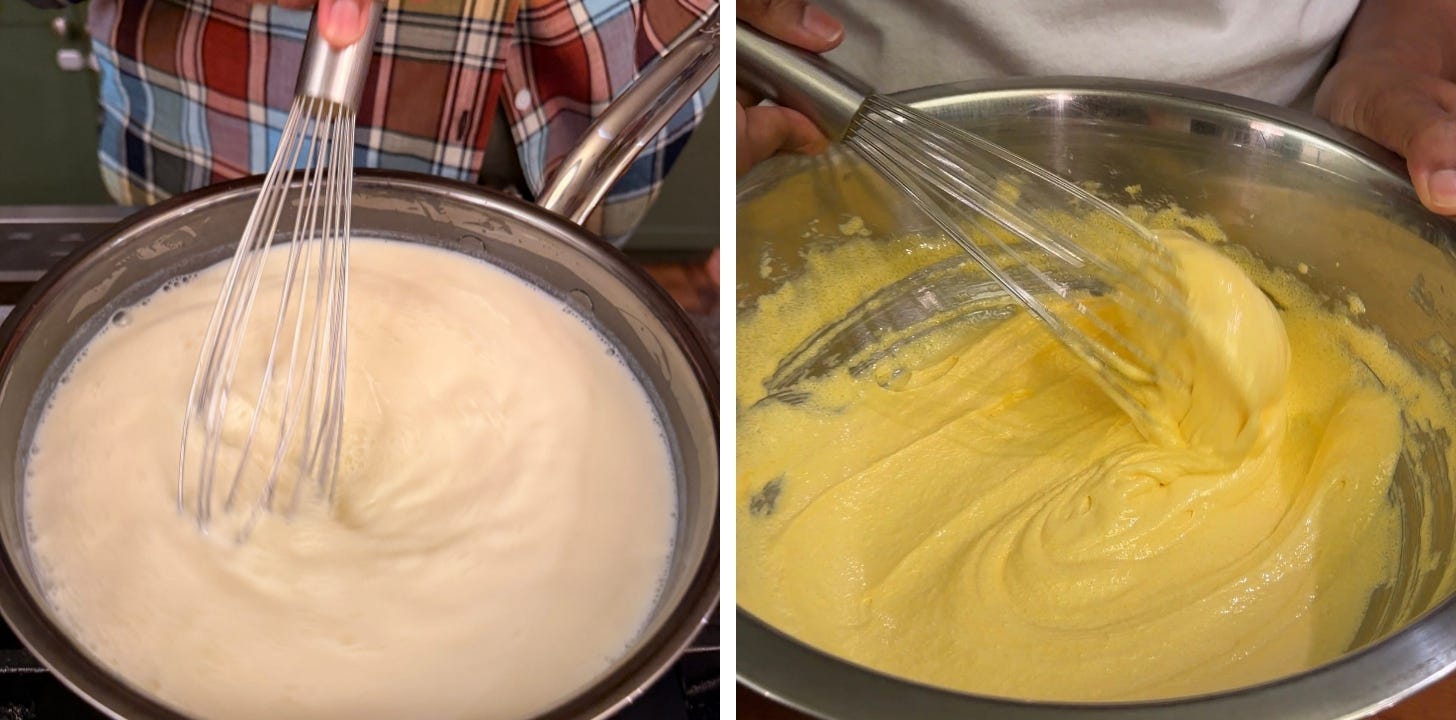
Custard-Style Pralines & Cream Ice CreamAlso known as French-style ice cream, this base is enriched with egg yolks for a luxe finish. Custard-style ice cream stays creamy longer in the freezer thanks to the additional fat and emulsifiers in the yolks. The egg flavor can sometimes mask other flavors, which is why I like to use this base where the custard would be complementary, like in this Pralines and Cream. Vital steps for the best texture: beat the sugar and yolks until thickened and pale before adding to the milk; cook just until steamy to prevent the eggs from curdling; chill 24 to 36 hours, not just to cool the base but to deepen its flavor. ingredients
steps
The Essentials for Ice Cream At HomeI’ve spun a lot of ice cream. In restaurant kitchens, while testing for Serious Eats, and now in my own apartment at a pace that doesn’t make me want to cry. Trust me on these. Small tools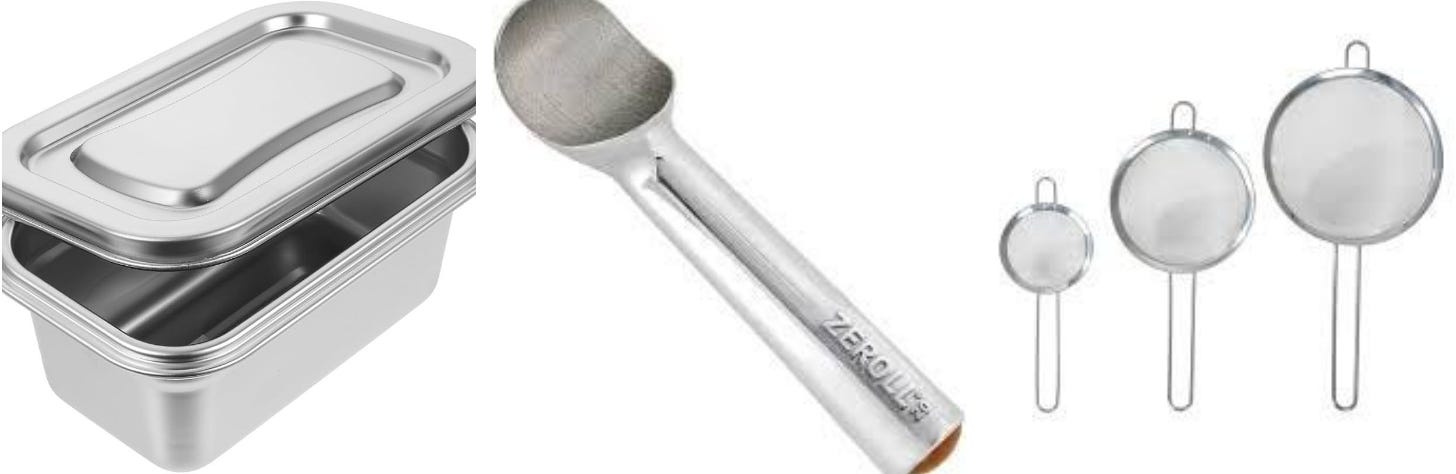
French-Style Whisk The long, narrow shape is perfect for whisking a custard base in a saucepan, reaching the corners without making a mess. Also vital to making a lump-free bechamel. Stainless Steel Mixing Bowls A lot of them. Stainless is what you want: it’s light, virtually indestructible, and won’t chip or crack if you knock it around. Porcelain looks nicer on a shelf, and that’s about all it has going for it. Saucier The rounded sloped sides mean no corners for the custard base to hide in a curdle. Your whisk can actually reach everything, evenly stirring everything and avoiding hot spots. Besides ice cream, this is the pot I reach for when making roux-based sauces like bechamel and gravy. Fine Mesh Strainer Because you don’t want any unexpected lumps (ew). Loaf Pan The ideal vessel for layering toppings into ice cream, like the caramel swirl in the Pralines & Cream Reusable Ice Cream Storage Containers If you find yourself regularly making ice cream and are sick of having to peel off layers of plastic wrap every time you want a scoop. The Best Ice Cream Scoop Nothing beats the Zeroll. The shape of the handle, the slope of the scoop, the weight of the body, it feels oddly therapeutic every time I scoop with it. Also lasts forever with no thumb press gears to break, mine’s going on 20 years. Ice Cream Bowls The perfect bowl. I don’t know what else to say, just trust me. Machines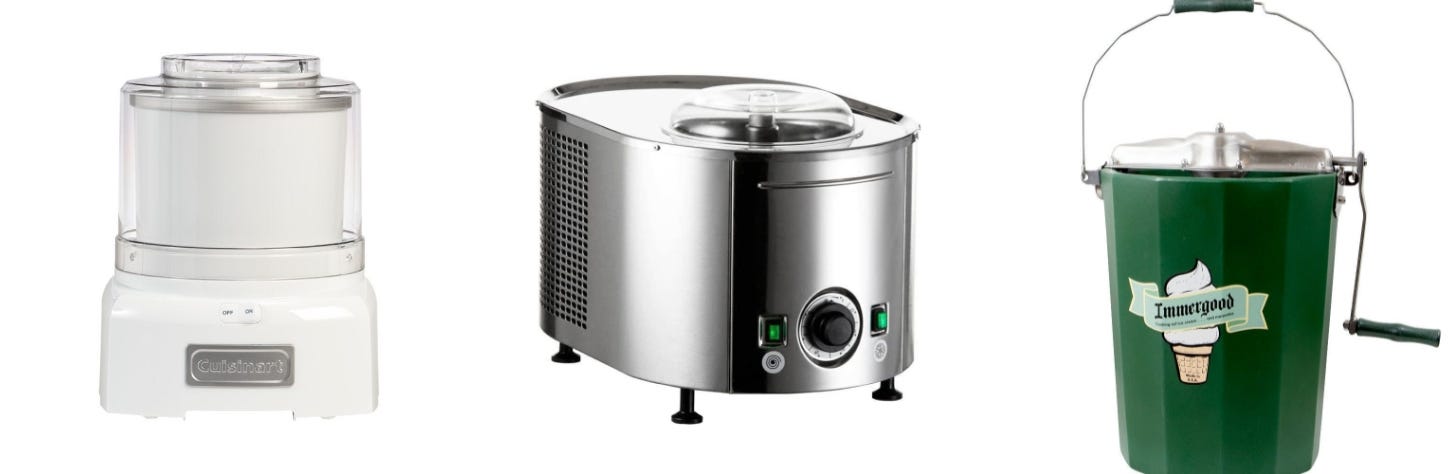
Cuisinart 1.5 Quart Ice Cream Maker This is the machine I recommend if you’re just getting into ice cream and only plan churn one batch at a time. It’s affordable, reliable, and the 1.5-quart capacity is the right size for home cooking. The base must be thoroughly frozen before use, so if you don’t have a great freezer, this machine won’t work well for you. But once frozen, a 1-quart batch churns in around 40 minutes, which is on par with most compressor models. (Churn time is important because faster churn = smaller ice crystals = smoother ice cream.) I’d don’t recommend back to back batches as the base warms up and the churn time with run long. Lello Musso Lussino This is for folks who are ready to dedicate themselves to ice cream. The Lello is easily the best at-home compressor ice cream machine on the market. Compressor machines have their own refrigeration unit built in, so there’s no bowl to pre-freeze. I’ve found it to churn a well-chilled one-quart batch in 20 minutes, comparable to restaurant machine, for an incredibly smooth and dense, professional-level texture. It’s large, heavy, and expensive at $800, but far better than the $500 machines I’ve worked with. If you’re on the fence, I recommend the splurge. Immergood Hand Crank Stainless Steel Ice Cream Maker This old-school, hand-crank, ice-and-salt machine produces ice cream unlike anything else. The texture is denser, harder, and almost crystalline in a way that’s uniquely satisfying, and making it is a memorable event for the friends and family. It’s for summer parties, kids who need something to do, and anyone who wants to understand how ice cream actually works at a physical level. The full stainless-steel construction and replaceable parts mean your kids kids kids will be churning with it. I love this thing. 🌈 Cookbook Rainbow 🌈Ice cream books are a specific sub-genre, and there are more bad ones than good ones. Here are some great ones: 
Jeni’s Splendid Ice Creams at Home Jeni Britton Bauer pioneered an egg-free Philadelphia-style method utilizing cream cheese for stability. No, this isn’t a cream cheese ice cream. She harnesses the emulsifiers and stabalizers in cream cheese to make her dense and creamy base. The flavors are inventive without being annoying. Goat cheese with roasted cherries. Salty caramel. Wildfire. The Perfect Scoop by David Lebovitz Lebovitz covers everything: ice creams, gelatos, sorbets, granitas, sherbets, frozen yogurts, plus sauces, mix-ins, cones, and accompaniments. The recipes always work exactly as written, and the foundations he lays are solid enough that once you’ve cooked through a few of them, you’ll start riffing confidently on your own. Hello, My Name Is Ice Cream by Dana Cree The most technically rigorous ice cream book written for home cooks, from a pastry chef who actually understands the science. Cree gets into stabilizers, overrun, texture, the physics of freezing, all the stuff that most ice cream books gloss over because they assume you don’t want to know. You want to know.
|




Comments
Post a Comment