
PLUS: The future is facsimiles.
|
|
Did you watch fireworks for Fourth of July? Shame on you! They’re dangerous and bad for the environment and stress out the doggos. You should’ve gone to a drone show instead.
When Sheon Han first pitched me a survey of the drone show skyscape, I instantly brightened. I was aware of the medium, of course—clips from a recent KPop Demon Hunters drone-fest in Korea were, as it were, in the air—but I knew almost nothing about it. How’d it work? Who were the major operators? Was it actually better than fireworks?
Sheon outdid himself. Not only did he attend two shows and visit with a number of industry players, he got so immersed in the medium that he had what can only be called a religious experience. Jesus, indeed, makes multiple appearances in the piece. Upon reading a draft, my boss (not a Jesus person) declared, “This is vastly better than it needs to be.”
But Sheon’s ultimate point isn’t spiritual. It’s communal. If you love your country and fellow humans and believe technology can still inspire awe, prove it. Read this winning piece.
|
|
Story originally published in September 2023
|
|
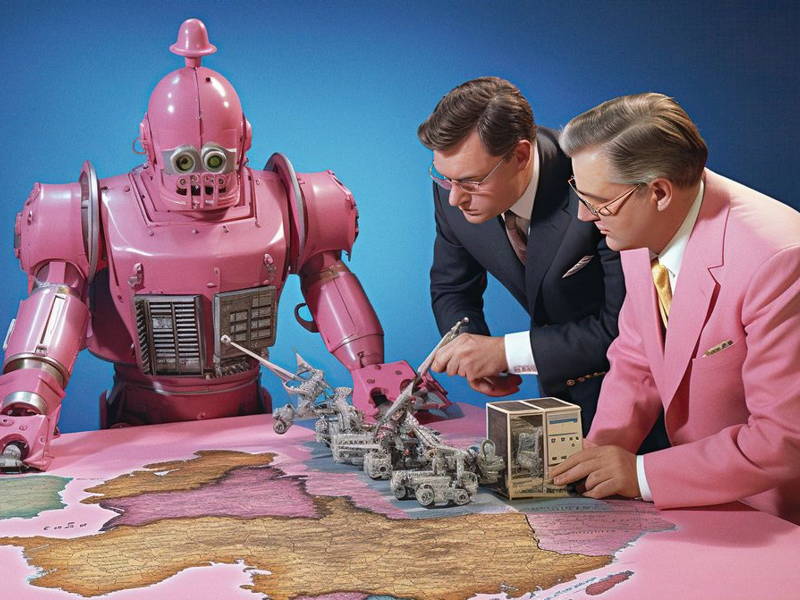
Wired contributing writer Virginia Heffernan knows a little about experiencing awe in the face of technology. Two years before Sheon marveled while “witnessing humanity inch yet closer to annihilation by drone swarm,” Virginia wondered if watching robots take over the world might be downright pleasant. She imagined humanity stepping aside with grace: We really liked working with you, robots, and are happy you are winning.
As new technology overtakes ancient human inventions such as airborne explosions and board games, is it possible the new roboticized versions might be improvements on the originals? Share your thoughts in the comments section or send an email to samantha_spengler@wired.com.
|
|
|
MORE GREAT STORIES THIS WEEK
|
|
|
|
THE BIG STORY
By Ian Bogost
In a world regulated by devices, humanity has become disconnected from the physical world—from stick-shift cars to postcards.
|
|
|
|
|
|
BUSINESS
By Joel Khalili
Verity Harding tells WIRED that the US government’s nationalistic attitude toward AI is evidence that a worst-case scenario is taking shape.
|
|
|
|
|
|
THE BIG STORY
By Andy Greenberg
Burst water mains. Evacuated hospitals. In a closed-door simulation, insurers played out their response to a mass disruption by China’s Volt Typhoon hackers—and found a nightmare scenario.
|
|
|
|
This week, WIRED published an excerpt from video game designer Ian Bogost’s latest book, The Small Stuff: How to Lead a More Gratifying Life. In the excerpt, Bogost laments that automation has removed struggle—the condition necessary for humans to feel gratification—from our daily lives. In the comments section, WIRED readers echoed Bogost’s concerns: “I never use [road maps] anymore—I use GPS. The result is that I no longer have a visceral understanding of my location or the geography I’m navigating.” Some rejected Bogost’s premise entirely: “My all-electric boat with a joystick controller will be silent and odor free, completely unlike the twin diesel engines its predecessor would have had. Yes, I'll be more disconnected from the machine, but far more connected with and less impactful upon the nature I pass through.”
Tell us about your favorite WIRED stories and magazine-related memories. Write to samantha_spengler@wired.com, and include “CLASSICS” in the subject line.
|
|
This email was sent to you by WIRED. To ensure delivery to your inbox (not bulk or junk folders), please add wired@newsletters.wired.com to your address book.
Copyright © Condé Nast 2026. One World Trade Center, New York, NY 10007. All rights reserved.
|
|







Comments
Post a Comment