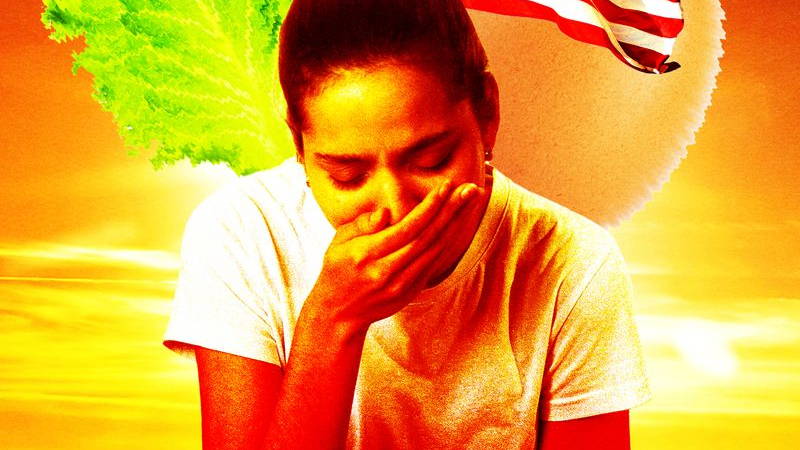
Summer barbecues have hit different this year. Do the deviled eggs have salmonella? Is the lettuce on your burger worth a week on the toilet? To pass on jalapeños on that bacon-wrapped hot dog or not? (Personally, I would absolutely risk it all for a fully loaded Sonoran dog.)
Foodborne illnesses have seemingly been everywhere this summer, and Kate Taylor and Emily Mullin spent weeks talking to experts and crunching the data to understand why. Their findings: The Food and Drug Administration has identified more than 12,800 illnesses tied to foodborne outbreaks in 2026, already far surpassing the number it has identified in any year since 2020. For comparison, there were 895 cases related to foodborne outbreaks last year.
The reasons are manifold. Some are structural and predate the Trump administration 2.0. The US food system is an unruly global tangle of suppliers. Many companies also operate multiple brands—salad purveyor Taylor Farms, for example, also sells its greens under the Earthbound Organics moniker—making it hard for the average person to know what’s coming from where.
The system to monitor the supply chain is also chronically underfunded and under-resourced. The US Government Accountability Office found that the FDA conducted an average of 917 foreign inspections per year from 2018 to 2023, far fewer than the 8,353 domestic inspections it conducted over the same period.
But the Trump administration’s cuts have made things even worse. Last year, the administration cut roughly $12 billion in grants to state health departments, which are the first line of defense in foodborne illness outbreaks. It also slashed staffing at the FDA and the Centers for Disease Control and Prevention, including the lab responsible for monitoring cyclospora, the parasite that’s driven this summer’s explosive-diarrhea outbreak.
Unfortunately, the spate of foodborne illnesses is likely to continue until morale improves. While summer is usually prime time for pathogens that can cause gastrointestinal distress, fall is shaping up to be a hot one thanks to El Niño. With weakened food safety and health monitoring, sick hot American summer is likely to give way to sick hot American fall.
Or as Barbara Kowalcyk, director of George Washington University’s Institute for Food Safety and Nutrition, put it, “a lot of our foodborne illness cases peak in August, September, even early October. So we're just in the beginning.”
Also on my radar this week: We’re cooking up something new. Data center politics are getting weird. The president is touting their benefits. So is the Democratic candidate for governor in Wisconsin. Meanwhile, Steve Bannon’s data center guy hates them with a passion, and Abdul El-Sayed, a progressive candidate for Michigan’s open Senate seat, has called for a pause on building them. We’re doing a weekly column through the midterms to help make sense of this strange primordial stew. The first edition drops Sunday, so make sure to subscribe to WIRED’s daily newsletter.






Comments
Post a Comment