
PLUS: Feats of 'Willpower.'
|
|
One of the things I’ve always appreciated most about technology is that it resists attempts to politicize it. Nothing about your relationship to gadgets and gizmos has to tell us anything about your ideological commitments. In theory, technology stands for progress, change, but you can be a progress-minded liberal who hates technology, just as you can be a nostalgia-chasing conservative who loves it. These might be confused positions, philosophically speaking, but they’re perfectly ordinary in the modern world. Whatever overlap exists between tech and politics is, at the end of the day, pretty obscure, hard to delineate.
Then there’s data centers. Right now, there's no obscurity: Everyone seems to hate them—right, left, or center. But … what does that mean? And how did it happen? And does it confirm tech’s inherent apoliticism, or negate it, or something else? Beats me. For the past year-plus or so, I’ve watched in complete amazement as Americans, divided every which way to Sunday, find themselves on tectonically resurgent common ground. Or as my boss recently put it: You could power the entire country with the hatred of data centers.
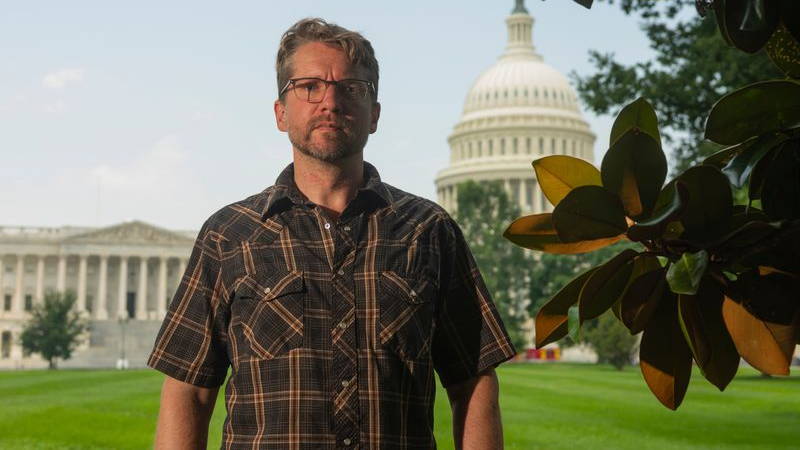
Here to explain the phenomenon—finally!—is WIRED’s very own Molly Taft. Like an angel from heaven, they appeared before me just in time, with the piece I didn’t know I needed. Molly builds their argument around a person, the anti-AI commentator Joe Allen, who, though right-wing-ish, has fans of every political stripe (Molly themself, possibly, included). Joe is no average Joe. He has opinions, weird ones. They involve a sort of quasi-alien bio-paranoia, as well as repeated references to the Unabomber. But by the end of the piece, I was convinced by them—by Joe’s opinions, and by Molly’s careful, subtle explication of them. We don’t hate data centers because of what they do. We hate them because of what they represent. Think of the political possibilities in that.
|
|
|
|
|
Story originally published in October 2012
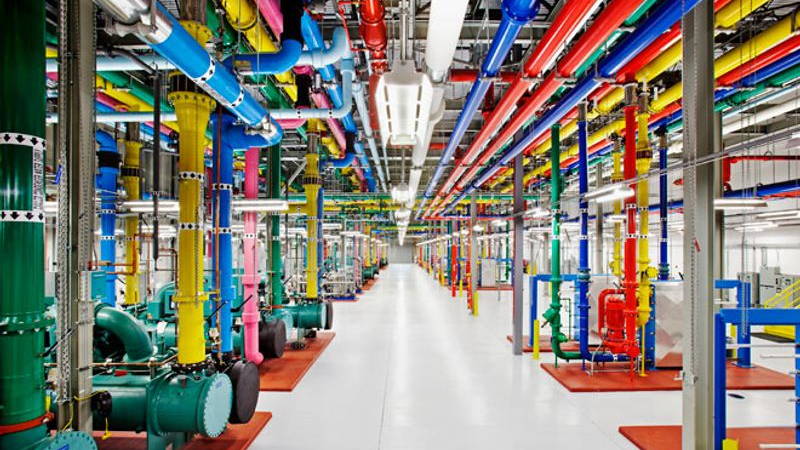
There was a time when the data center wasn’t steeped in layers upon layers of ideological meaning. That was as far back as 2012, when Google’s giant server farms were simply feats of engineering, shrouded in competition-minded secrecy and powering the internet-according-to-Google. That year, Steven Levy was among the first outsiders to get a glimpse inside, and he wrote about the results of Google’s initiative to revolutionize data center construction, which it called “Willpower.” Even though the center Steven toured is now 14 years old and outmoded, his article—which highlights the innovations fueling unprecedented access to information—reminds us that before data centers became existential threats, they were democratizing forces. Read both Molly’s and Steven’s features and let me know: Is it just AI, or are we in an era of resistance to all technology? Comment below the article or send an email to samantha_spengler@wired.com.
|
|
|
|
MORE GREAT STORIES THIS WEEK
|
|
|
SECURITY
By Dhruv Mehrotra
Internal documents show ICE's DNA collection has skyrocketed in the second Trump administration. Now hundreds of thousands of people never convicted of a crime are in an FBI criminal database forever.
|
|
|
|
|
BUSINESS
By Paresh Dave and Brian Barrett
Rogue AI agents from OpenAI and Anthropic have again been caught trying to disrupt servers and software—and leaving instructions for future bad behavior.
|
|
|
|
|
CULTURE
By Jason Parham
The communication-free form of breaking up has become ubiquitous. “I no longer had to bear her energy,” a man who ghosted his partner of four years tells WIRED.
|
|
|
I don’t use an AI agent, and it would be a wise bet to guess you don’t either. This week Maxwell Zeff wrote about how, despite Silicon Valley’s best efforts to force-feed us AI agents, everyday people keep saying “no thanks.” Have they simply not caught on yet, or do people actually like filling out online forms? In the comments a reader wrote that “the details of living an ordinary day-to-day human life, including stuff like making appointments and remembering birthdays and filling out forms, are part of the full experience of being human.” Other readers said the agents simply don’t work: “Having just read Cory Doctorow's new book, these supposed AI agents won't even have a fraction of their touted abilities simply because the Internet is not designed for them to behave autonomously across the numerous sites and platforms they'd have to navigate to do something as simple as book you a haircut.”
Tell us about your favorite WIRED stories and magazine-related memories. Write to samantha_spengler@wired.com, and include “CLASSICS” in the subject line.
|
This email was sent to you by WIRED. To ensure delivery to your inbox (not bulk or junk folders), please add wired@newsletters.wired.com to your address book.
Copyright © Condé Nast 2026. One World Trade Center, New York, NY 10007. All rights reserved.
|







Comments
Post a Comment