AI agents won’t help you touch grass

I’ve done a burst of non-Embedded writing recently, first for Slate’s Yarn Week package about the legacy of the Pussyhat and the relentless crafting drama online. Then I blogged about the insane response to Nigella Lawson as GBBO’s newest judge. —Kate New on ICYMI: Another way Meta and OpenAI are luring people to their agents is by making them “cute.” Chatted about it with it's steffi!
Head over here to subscribe to ICYMI wherever you listen to podcasts 🫶
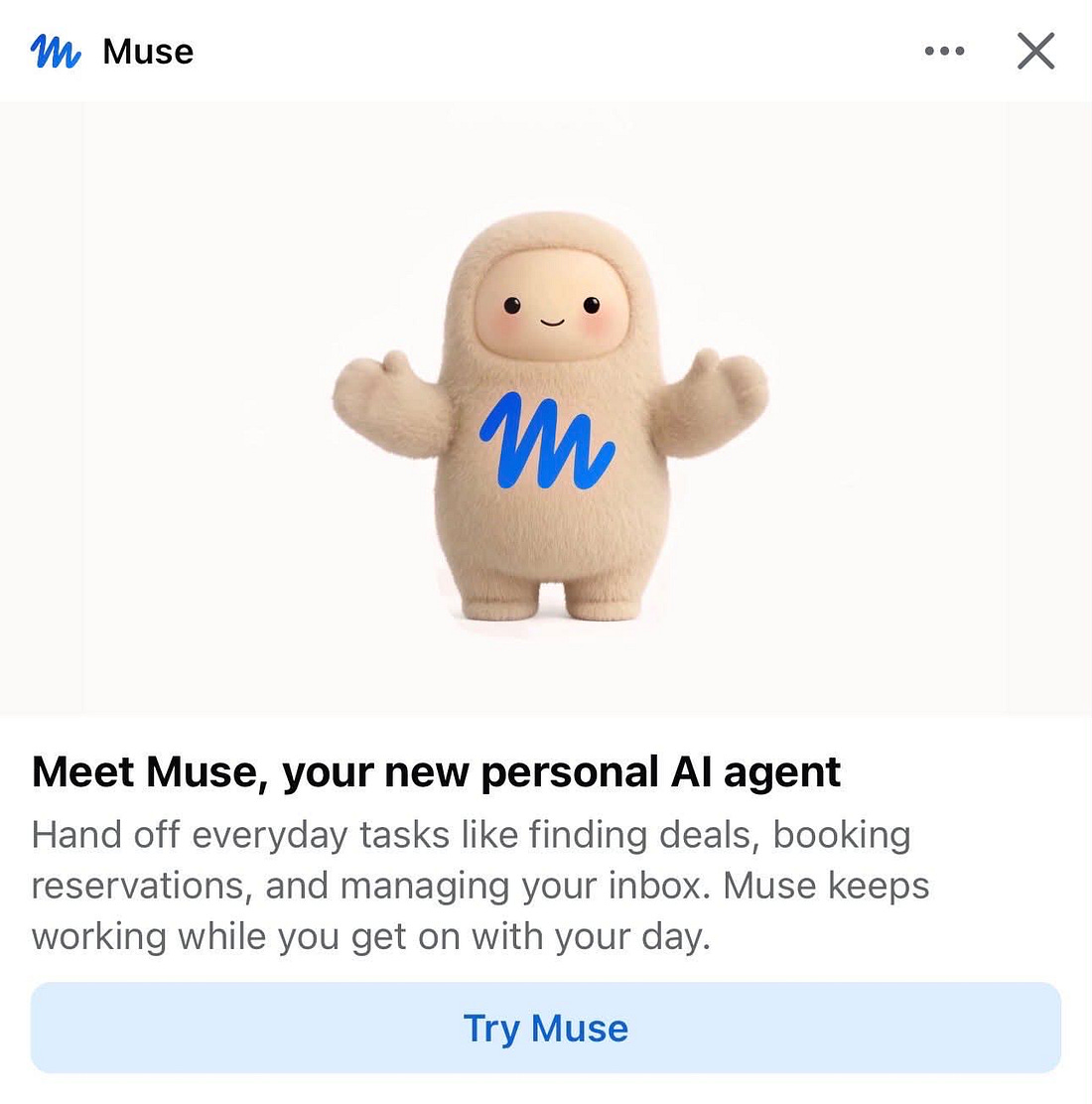
Over the summer, I wrote about anti-phone marketing being used to sell phones. I had just been to the 2026 Made By Google event, where almost every new feature and product was advertised with a promise that it will help you spend less time on them. At that time, it was only really Google that was acknowledging the dumbphone in the room. It turns out that’s because other tech companies like Meta were saving the“log-off language” for something that would be rolling out a few months later: AI agents. “[Dots are] a whole new way to work with AI,” OpenAI’s description of their agents reads. “One that gets to know what matters to you, is always working on your behalf, and takes important work off your plate so you get more of your time and attention back.” Unlike chatbots, which can also do tasks for you on command, agents monitor and work behind the scenes based on larger goals, like staying on top of your child’s school emails. In one example given by Meta, which recently launched “Muse,” the agent scans your emails, pulls out forms that need to be signed, and goes shopping for school supplies based on lists sent by the teacher, checking in with you along the way. I won’t pretend this didn’t pique my interest. While I don’t want to talk with a chatbot or use an LLM to “help” me write, I don’t hate the idea of something that could take control of my email inbox. I’m constantly leaving conversations hanging or stumbling upon opportunities that I realized I missed because I only just had the time to sit down and dig through it all. Something that could surface those things, and keep reminding me to reply, wouldn’t go amiss at Kate Lindsay LLC.
And yet, the idea of giving Meta even more of my data does not appeal to me. As someone who grew up on Facebook and entered adulthood via Gmail, the Meta-Google data merger that would need to happen on my phone to facilitate any of this would blow Paramount-Skydance out of the water. I also don’t trust myself not to get sucked in. If I’m already using an agent to organize my email, what’s to stop me from dabbling in the various other ways these products promise to make my life so much easier? Especially when they dangle the promise of less screen time and more IRL experiences by doing so. Meta’s other examples for how one might use Muse include helping to plan your running training schedule, complimenting you for staying on top of your goals, and finding and proposing upcoming community events for you to sign up for. In another, it rebooks your flight based due to impending bad weather. The version of you with Meta Muse is an athletic jet-setter and super parent, and that’s just the beginning. Of course, this is all advertising material. In practice, things are a little different... Continue reading this post for free in the Substack app
|










Comments
Post a Comment