Did I miss my career-making moment?

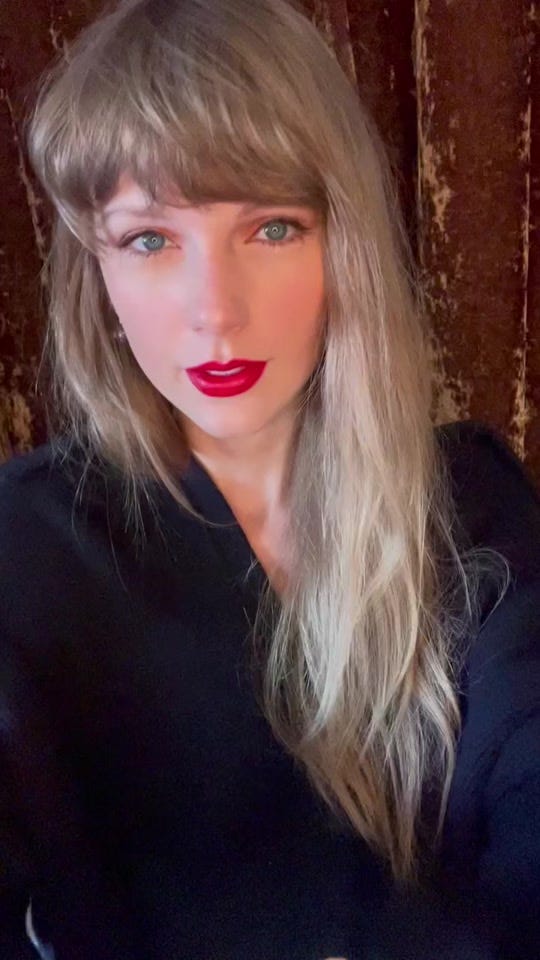
What’s a better sliding doors moment, this or this? —Kate The millennial pause did not, fittingly, get off to a quick start. In November 2021, I made note of a new video in which the creator @nisipisa says, “I am obsessed with the fact that not even Taylor Thee Swift is immune to the inevitable Millennial obligatory pause-before-you-start-talking-in-a-TikTok-to-make-sure-it’s-actually-recording.” The video sat at the exact intersection of my interests: the internet, and how it changes living, breathing people. But the observation didn’t immediately catch on, so my post about it remained in my drafts until July of 2022, when I had no other ideas. The post didn’t perform better or worse than any of my other Embedded essays. And then I heard from Adrienne LaFrance. I was working at The Atlantic at the time, producing their newsletters but not writing, despite my many (bad) pitches to editors. But Adrienne, the executive editor, had read the post and wanted a more in-depth version for the Atlantic’s site. The article went up on August 6. When I woke up that morning, my story was already The Atlantic’s most-read piece that day, and after I made a TikTok about it, it stayed at number one for a week. It became the highest-performing story that month, outperforming even the investigation that would go on to win the 2023 Pulitzer Prize. While they don’t award Pulitzer Prizes for niche internet observations, everything about my career still changed. 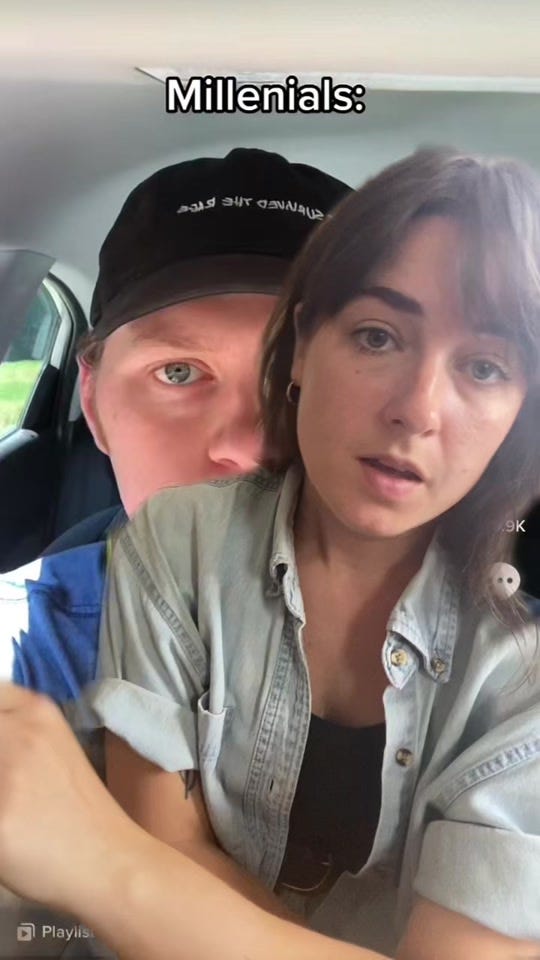
The “millennial pause” is now colloquial internet jargon. You’ll see it in comment sections, Jeopardy clues, and as the subject of TikToks locked into eternal Gen Z vs. Millennial debates. In a true sign of mainstream assimilation, the New York Times purported to have discovered it almost a full year later. It got me emails from book agents, harassment from millennials, and a much more receptive audience of editors. Four years later, as the millennial pause continues to pop up in videos I’m watching and books I’m reading and advertisements and punchlines and merch, I feel further and further away from it. One time, while I was making a social video for a startup, their social editor told me, “Make sure to cut out this thing called ‘the millennial pause.’” Don’t cite the deep magic to me, witch, I wanted to reply. I was there when it was written. The millennial pause has been completely separated from me, as it should. But every reappearance in the zeitgeist is a reminder that I let it get away. Outlets that had never once responded to my pitch emails were suddenly in my inbox asking for more. But on the internet, new ideas don’t extend your success as often as doubling down on your breakthrough does. My millennial pause video has over two million views, and it remains the most unsettling thing that’s ever happened to me. It wasn’t just the comments—it was the stitches and the reaction videos and the discourse. The inventor of the power pose posted an angry tweet calling me ageist. The millennial-focused creator Rod made a video that made it seem like I had committed a hate crime, sending a hoard of angry followers to attack me on social media. This was my moment to bear down—fight back, claim my success, and turn the backlash against me around, into momentum and more success. I should have posted a response video. I should have engaged with comments. I should have done joking follow-ups and niche memes and changed my username to “Millennial Pause Girl.” I should have taken agents up on their offers to help me write Millennial Pause: The Book. Instead, I retreated. I had never gone that viral before. While now I understand that the internet will react like this—with rage—to any viral idea, no matter what you’ve actually said, at the time it was genuinely distressing. Sometimes I’d open my phone and feel exhilarated; other times, I’d read feedback that left me ashamed. I would flip from thinking I had just supercharged my career to thinking I’d ruined it in the space of a single Instagram Reel. There were some things about the millennial pause that will prevent me from ever taking full ownership of it. The original video was from @nisipisa, and while I interviewed her for the piece, she didn’t want to go by her full name. The Atlantic has a strict policy about who gets anonymity and why, and this didn’t meet the bar. I was told to cut her quotes. While she’s obviously credited with coining the phrase, I can’t help but feel the piece obscures the full scope of her role. Had her quotes been in there, would she be the one making response TikToks? Would she have written the book? Any time I see the term in the wild and think about laying my claim, I think of Nisa, and I shut the fuck up. I make sure to use the word “popularized” in one-line bios, not “coined.” I try to point to her video any time it comes up in writing. The truth is, I didn’t want to write The Millennial Pause: The Book. I tried to capitalize on it by writing something adjacent to it, and failed. In subsequent viral moments, I realized attention follows the same cycle. I’ve been given opportunities to be the stop-posting-children-on-social-media girl, the dating-apps-are-bad girl, the, uh, rawdogging girl. (Again, the latter is an example of popularization, not coinage. The word was originally used in this new context by Jaboukie Young-White—another person of color, like @nisipisa. In both cases, I was the white-brunette-shaped conduit to mainstream virality, and I wasn’t wild about making that my brand, either.) I worried choosing any of these opportunities would mean enclosing myself in a gilded cage, at the expense of ever writing about anything else. But by choosing nothing in favor of anything, I now worry I’ve diluted my brand. I’m a professional lurker, floating in cyberspace, untethered but unreliable. You may have wound up here thanks to a piece about phones and boredom and now are having to deal with posts about Olivia Nuzzi’s “demure nudes” in your inbox. But I like that I can wake up one day and write about bosses harassing their employees by being bad at AI, and the next, the supply chain issue plaguing the knitting community. I like that the same magazine where I published a piece about the downfall of Airbnb is also where I went long on why dogs are so obsessed with Lamb Chop. Even on ICYMI, we oscillate from episodes about sexy werewolf microdramas to debunking the AI apocalypse in the same week. In the background, I’m working on a novel about women’s media, an industry I worked in for four years in the 2010s but never write about today. This makes it hard to “sell myself” to publishers or audiences who really need people to be just one thing. That’s what we exchange for a seal of success: the book deal or chyron or (™) next to the brand name. But maybe being able to opt out of these things is its own kind of freedom—that the real privilege of not going all in on being Just One Thing is that I don’t have to be.
Edited by Nick Catucci. Logo by Kelsey Davenport.Forwarded this email? Subscribe.Reply to this email for a media kit.Visit Embedded’s older brother publication, RiffPost.
|






Comments
Post a Comment